

Choosing the best commercial flooring for an office is a decision that goes far beyond aesthetics. It involves a careful balance of functionality, comfort, durability, and even acoustics. In the UK, where office environments range from modern co-working spaces in London to corporate headquarters in Manchester and compact startup hubs in Bristol, the right flooring can shape the atmosphere of the workplace and impact both staff wellbeing and operational efficiency.
With so many flooring options on the market—each boasting different advantages—it can be difficult to determine which material is the right fit for your commercial office. Factors such as foot traffic, maintenance requirements, acoustic performance, and even environmental considerations must be taken into account. This blog explores the most popular office flooring types used across the UK and breaks down what makes each one suitable—or unsuitable—for commercial use.
The Role of Flooring in Office Design
Before diving into the materials, it’s worth understanding why flooring matters so much in the modern workplace. In recent years, office design has evolved from purely functional layouts into thoughtfully curated environments designed to support productivity, collaboration and employee wellbeing. Flooring plays a subtle yet powerful role in achieving those goals.
The type of flooring you install sets the tone for the entire office space. Sleek, minimal flooring like polished concrete can give a contemporary, industrial feel. On the other hand, soft carpet tiles may foster a sense of comfort and warmth. More than that, the right flooring can help absorb noise in open-plan layouts, reduce slips and falls, improve air quality, and even comply with sustainability targets for green office buildings.
Key Considerations When Choosing Office Flooring
Several criteria should guide your decision when choosing the best flooring for a commercial office. First and foremost is durability. Offices see a lot of foot traffic, particularly in entranceways, corridors, meeting rooms and breakout areas. The flooring needs to withstand that daily wear without showing signs of distress within a short period.
Next is acoustic performance. With the prevalence of open-plan office design in the UK, sound management has become increasingly important. The right flooring can absorb or dampen noise, helping to create a quieter and more focused work environment.
Comfort is also a significant factor, especially in workplaces where employees may be standing or walking around for extended periods. Flooring should offer some degree of underfoot cushioning without compromising stability.
Aesthetics and brand identity matter too. Flooring contributes to the overall visual language of the office. Whether you’re trying to create a calm, neutral space or make a bold statement with colours and patterns, your flooring should align with your broader design goals.
Finally, sustainability is playing a bigger role in office design decisions. Many UK companies are striving to reduce their carbon footprint, and flooring can either support or undermine those efforts depending on the materials and manufacturing processes involved.
Carpet Tiles: The Classic Office Staple
Carpet tiles have long been a favourite in UK offices, and it’s easy to see why. They are practical, versatile, and provide excellent acoustic and thermal insulation. In open-plan spaces, carpet tiles help to absorb sound, reducing distractions and making the environment more pleasant for focused work.
From a maintenance standpoint, carpet tiles are especially advantageous. If one tile becomes stained or damaged, it can be replaced individually without having to re-do the entire floor. This modularity makes them a cost-effective option over time, especially in high-traffic areas.
Carpet tiles also allow for design flexibility. They come in a range of colours, patterns and textures, allowing companies to inject personality into their office interiors or even delineate different zones within the workspace.
However, carpet tiles are not ideal for areas prone to moisture, such as kitchenettes or near entrances where wet shoes may tread. They can also harbour dust and allergens more than hard surface flooring, although modern low-pile designs and regular professional cleaning can help mitigate this.
Luxury Vinyl Tile (LVT): Stylish and Practical
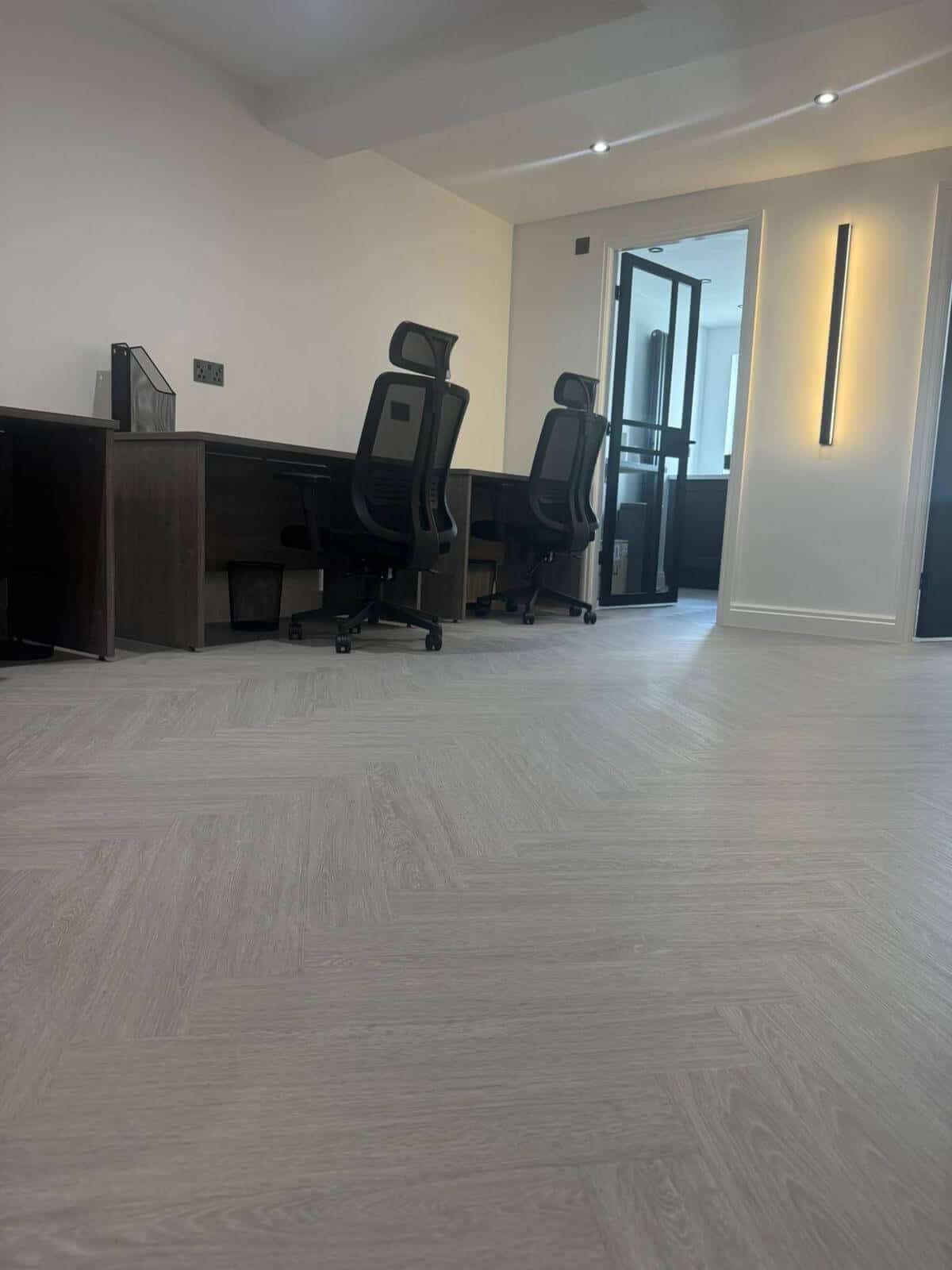
Luxury vinyl tile, or LVT, has grown in popularity in recent years and is now a top contender for modern commercial office spaces in the UK. It offers the visual appeal of natural materials like wood or stone, but with the resilience and easy maintenance of vinyl.
LVT is particularly valued for its durability. It resists scuffs, scratches and stains, making it suitable for high-footfall areas like reception zones and corridors. It also works well with underfloor heating, which is increasingly common in modern office buildings.
Another key benefit is its acoustic performance. Many LVT products come with an integrated underlayer that helps to dampen noise, making them a suitable option for collaborative workspaces and open-plan layouts.
Aesthetically, LVT provides a more premium look than standard vinyl or linoleum. It can convincingly mimic the look of real wood or ceramic tiles without the associated cost or installation complexity. Maintenance is straightforward, usually involving regular sweeping and occasional mopping with a neutral cleaner.
LVT is also compatible with sustainability goals, as many manufacturers now offer ranges with recycled content or low-VOC emissions. However, it is important to ensure that the product has suitable commercial-grade wear layers to withstand long-term use in office settings.
Hardwood Flooring: A Statement of Sophistication
For businesses looking to make a high-end statement, engineered hardwood flooring is often the go-to choice. While less common in everyday office environments due to its cost and maintenance needs, it can be a powerful design feature in executive offices, boardrooms or boutique workspaces.
Hardwood flooring brings a sense of warmth and sophistication that few other materials can match. It adds real value to the property and aligns well with luxury or design-conscious brands. Engineered wood, in particular, offers more dimensional stability than solid wood, making it more appropriate for commercial use.
The drawback of hardwood in a commercial setting is its susceptibility to dents, scratches and moisture damage. It also requires more maintenance, including periodic refinishing. In high-traffic areas, rugs or protective mats may be needed to preserve the floor’s appearance.
Despite these challenges, for the right business and the right space, hardwood can be an investment in brand image and atmosphere.
Polished Concrete: Industrial and Modern
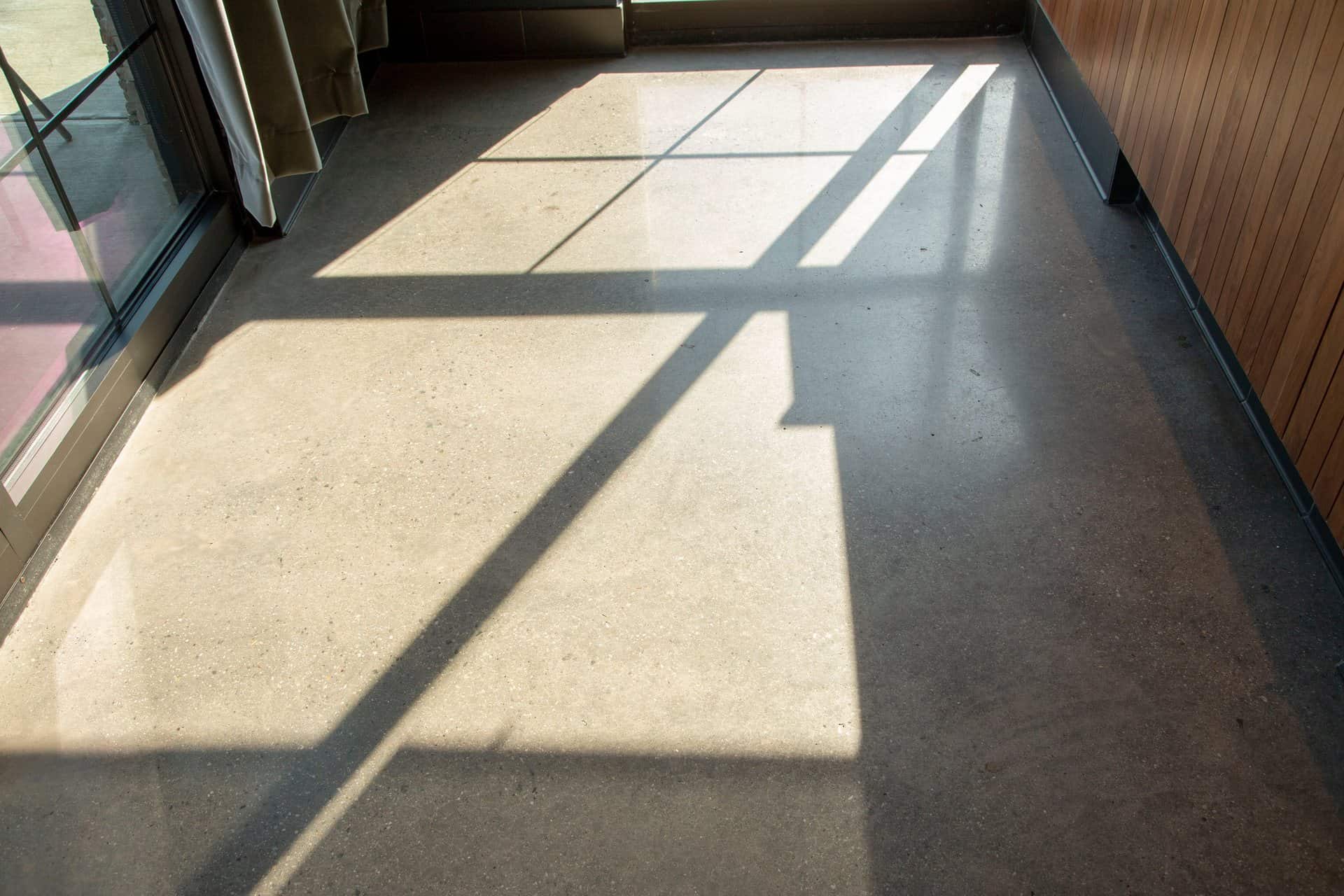
Polished concrete flooring is becoming increasingly popular in modern office design, particularly in converted industrial buildings or minimalist spaces. Its sleek, durable surface creates a contemporary aesthetic that aligns with urban and tech-focused brands.
From a performance perspective, polished concrete is extremely hard-wearing and easy to maintain. It’s ideal for high-traffic areas and can be treated with sealants to resist staining. The smooth surface reflects natural light, helping to brighten interiors and reduce the need for artificial lighting.
One of the key advantages is its longevity. Properly installed and maintained, polished concrete can last decades without needing replacement. It’s also a sustainable option when used in buildings where the concrete substrate is already present and simply needs finishing.
However, it does come with a few drawbacks. Polished concrete can be noisy and cold underfoot, so it may not be suitable for all office environments. Acoustic panels, area rugs or combining it with other softer materials can help to mitigate these issues.
Rubber Flooring: Resilient and Comfortable
Rubber flooring is often associated with gyms and healthcare settings, but it’s finding a place in UK office environments too—particularly in creative or alternative workspaces. Its natural shock-absorbing properties make it comfortable for prolonged standing, which is a benefit in environments with standing desks or collaborative work areas.
It’s also slip-resistant, extremely durable and easy to clean, making it a good option for utility areas, entranceways and corridors. Rubber flooring is available in various colours and patterns, allowing for some design flexibility, although it may not have the same visual appeal as hardwood or LVT in client-facing areas.
As an added benefit, rubber flooring is often made from recycled materials and emits low levels of VOCs, which can support sustainability and indoor air quality goals.
Laminate Flooring: A Budget-Friendly Alternative
Laminate flooring offers the appearance of wood at a fraction of the cost, making it a tempting choice for offices with tighter budgets. It is quick to install and reasonably durable, though not as robust as LVT or hardwood in the long term.
In lower-traffic offices or temporary fit-outs, laminate can serve as a practical solution. It’s easy to clean and doesn’t trap dust, which supports a healthy indoor environment. However, it is vulnerable to moisture and may not be suitable in kitchens or bathrooms unless explicitly water-resistant.
For cost-conscious businesses, laminate flooring can be a way to achieve a polished, professional look without breaking the bank, but it should be chosen carefully with its limitations in mind.
The Right Flooring for the Right Zone
In many modern UK offices, the best flooring solution isn’t a single product but a combination. Carpet tiles may be used in open-plan work areas to absorb noise, while LVT or polished concrete might be chosen for reception spaces that need to make an impression. Kitchenettes and toilets often feature rubber or vinyl due to moisture concerns.
This zoned approach allows businesses to tailor their flooring choices to the needs of each part of the office, balancing cost, performance, and design intent. It also supports a more dynamic workspace, where different areas encourage different types of work and interaction.
Sustainability and Certifications
As sustainability becomes a growing priority for UK businesses, many companies are looking for flooring that aligns with their environmental policies. Look for certifications such as BRE Global’s Environmental Product Declarations (EPDs), FSC certifications for wood products, and low-VOC emissions to ensure healthier indoor air quality.
Some manufacturers offer closed-loop recycling programmes or use renewable materials in their products. In leased spaces, choosing modular or recyclable flooring can also ease future refurbishments and reduce waste.
Conclusion: Making the Best Choice for Your Commercial Office
Ultimately, the best flooring for a commercial office depends on the specific needs of the space, the brand image you want to project, and the performance criteria that matter most to your business. Whether you prioritise acoustic control, visual impact, low maintenance or eco-credentials, there is a flooring solution that fits the brief.
Carpet tiles remain a solid all-rounder, especially in traditional office layouts. LVT continues to gain favour for its blend of durability and design. Hardwood and polished concrete make bold statements in the right contexts, while rubber and laminate offer niche advantages where budget or comfort come into play.
By thinking about your office not just as a place to work but as a reflection of your company culture and values, you can choose a flooring material that supports your goals and enhances the daily experience of your staff and visitors alike. To find out more, contact the team at Banks Flooring Solutions.