

Choosing the right flooring for a restaurant, bar, or hospitality venue is one of the most important decisions you can make when designing or refurbishing your space. Flooring in these environments is not just about appearance; it needs to perform under pressure, withstand constant footfall, meet safety standards, and remain easy to maintain. With customers, staff, and deliveries all moving through the space daily, the wrong choice of flooring can quickly lead to wear, safety issues, and increased long-term costs.
In hospitality settings, your flooring plays a key role in both the customer experience and the day-to-day operation of your business. It needs to strike the right balance between style and practicality, ensuring your venue looks the part while functioning efficiently behind the scenes.
Why Flooring Matters in Hospitality Environments
Restaurants, bars, and hospitality venues are some of the most demanding environments for flooring. High foot traffic, spills, dropped items, and frequent cleaning all contribute to the wear and tear that floors experience. Unlike domestic spaces, where flooring may last for many years with minimal maintenance, commercial hospitality flooring needs to be far more durable and resilient.
Safety is another major consideration. Slips and trips are a real risk in environments where liquids are regularly spilled, making slip-resistant flooring an essential requirement. At the same time, flooring needs to be comfortable underfoot for staff who spend long hours on their feet, particularly in kitchens and behind bars.
The overall look and feel of your flooring also contribute to the atmosphere of your venue. Whether you are aiming for a modern, industrial style or a more traditional and welcoming environment, your flooring choice plays a significant role in shaping that impression.
Key Factors to Consider When Choosing Hospitality Flooring
Before selecting a flooring type, it is important to consider how your space will be used. Different areas within a hospitality venue often have different requirements, and what works well in a dining area may not be suitable for a kitchen or bar.
Durability should always be a top priority. Flooring needs to withstand heavy footfall, movement of furniture, and the impact of dropped items without showing signs of damage too quickly. Ease of maintenance is equally important, as floors in hospitality settings need to be cleaned regularly to maintain hygiene standards.
Slip resistance is critical, particularly in areas where spills are common. Choosing flooring with the appropriate safety rating helps reduce the risk of accidents and ensures compliance with health and safety regulations.
Appearance should also be considered, as your flooring contributes to the overall design of your venue. The right choice can enhance your branding and create a welcoming environment for customers.
Luxury Vinyl Tile (LVT) for Hospitality Spaces
Luxury Vinyl Tile, often referred to as LVT, has become one of the most popular choices for restaurants and bars. It offers a combination of durability, style, and practicality that makes it well suited to hospitality environments.
One of the key advantages of LVT is its ability to replicate the appearance of natural materials such as wood or stone while providing a more durable and low-maintenance surface. This allows businesses to achieve a high-end look without the drawbacks associated with natural materials, such as susceptibility to moisture or damage.
LVT is also resistant to scratches and stains, making it ideal for areas with heavy use. It is easy to clean and maintain, which is essential in environments where hygiene is a priority. Its slightly cushioned feel underfoot can also provide added comfort for staff, making it a practical choice for both front-of-house and certain back-of-house areas.
Safety Flooring for Kitchens and High-Risk Areas
In commercial kitchens and other high-risk areas, safety flooring is often the most suitable option. This type of flooring is specifically designed to provide enhanced slip resistance, even in wet or greasy conditions.
Safety flooring typically features a textured surface that helps prevent slips, reducing the risk of accidents for staff working in fast-paced environments. It is also designed to be durable and easy to clean, with resistance to chemicals and frequent washing.
While safety flooring may not offer the same aesthetic appeal as some other options, it is essential in areas where safety and hygiene take priority. Choosing the right flooring for kitchens and preparation areas is a key part of creating a safe and compliant working environment.
Vinyl Flooring for Versatility and Durability
Standard commercial vinyl flooring is another popular option for hospitality venues. It offers a durable and cost-effective solution that can be used across a range of areas.
Vinyl flooring is known for its resilience and ease of maintenance, making it well suited to environments where spills and heavy use are common. It is available in a wide range of designs and finishes, allowing businesses to achieve the desired look while maintaining practicality.
This type of flooring can be used in dining areas, corridors, and other high-traffic spaces, providing a balance between performance and appearance. Its water-resistant properties also make it a reliable choice for areas where moisture is a concern.


Carpet Tiles for Comfort and Noise Reduction
While hard flooring is often preferred in many hospitality settings, carpet tiles can still play a role in certain areas. In spaces such as hotel lounges or quieter dining areas, carpet tiles can add warmth and comfort while helping to reduce noise levels.
Carpet tiles are particularly useful in environments where acoustics are important, as they help absorb sound and create a more relaxed atmosphere. They are also easy to replace individually if damaged, making them a practical option for maintaining the appearance of your space over time.
However, carpet is generally less suitable for areas where spills are frequent, so it is important to consider where it will be used within your venue.
Rubber Flooring for High-Impact Areas
Rubber flooring is another option that can be used in certain hospitality environments, particularly in back-of-house areas. It is highly durable and provides excellent slip resistance, making it suitable for kitchens, storage areas, and staff zones.
Its shock-absorbing properties can also help reduce fatigue for staff who spend long periods on their feet. While it may not be the first choice for customer-facing areas, it is a practical and reliable option for spaces where performance is more important than appearance.
Matching Flooring to Different Areas of Your Venue
One of the most important considerations when choosing flooring for a hospitality venue is recognising that different areas have different requirements. A one-size-fits-all approach is rarely effective.
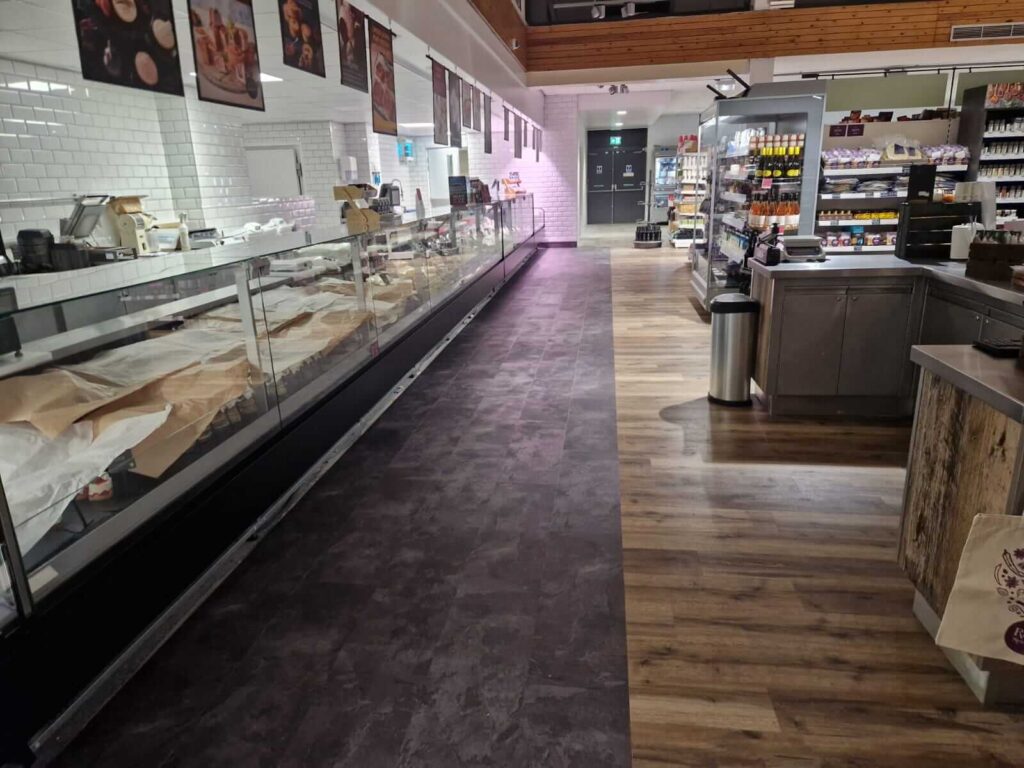
Dining areas often benefit from visually appealing flooring such as LVT, which creates a welcoming atmosphere while remaining durable. Bar areas may require a combination of style and slip resistance, ensuring both safety and aesthetics are maintained. Kitchens and preparation areas should always prioritise safety flooring, while corridors and entrances need materials that can handle constant foot traffic and dirt from outside.
By selecting the right flooring for each area, you can create a cohesive and functional space that meets both operational and aesthetic needs.
Maintenance and Long-Term Performance
Choosing the right flooring is only part of the process; maintaining it properly is essential to ensure it performs well over time. Hospitality environments require regular cleaning, and flooring should be able to withstand frequent maintenance without losing its appearance or functionality.
Materials such as LVT and vinyl are particularly well suited to this, as they are easy to clean and resistant to stains. Investing in high-quality flooring from the outset can also reduce the need for repairs or replacements, saving time and money in the long run.

Avoiding Common Flooring Mistakes in Hospitality
One of the most common mistakes businesses make is prioritising appearance over practicality. While it is important for your venue to look good, choosing flooring that cannot withstand the demands of a hospitality environment can lead to problems quickly.
Another mistake is failing to consider safety requirements, particularly in areas where spills are common. Ensuring your flooring meets the necessary safety standards is essential for protecting both staff and customers.
It is also important to think long-term. Cheaper options may seem appealing initially, but they often require more frequent replacement, making them less cost-effective over time.
Creating the Right First Impression
Flooring is one of the first things customers notice when they enter your venue, even if they are not consciously aware of it. The look and feel of your floors contribute to the overall atmosphere and can influence how customers perceive your business.
A well-chosen floor can help create a positive first impression, reinforcing your brand and setting the tone for the customer experience. Whether you are aiming for a modern, stylish bar or a warm and inviting restaurant, your flooring plays a key role in achieving that vision.
Choosing the Right Flooring for Your Business
Selecting the best flooring for a restaurant, bar, or hospitality venue requires careful consideration of both practical and aesthetic factors. By understanding the demands of your space and choosing materials that can meet those demands, you can create a flooring solution that supports your business in the long term.At Banks Flooring Solutions, we work with businesses across the hospitality sector to provide flooring that not only looks great but performs under pressure. From helping you choose the right materials to ensuring a professional installation, we take a tailored approach to every project. Based in the North West, we support businesses locally while also working across wider areas, delivering commercial flooring solutions that are built to last and designed to make an impact in busy hospitality environments.